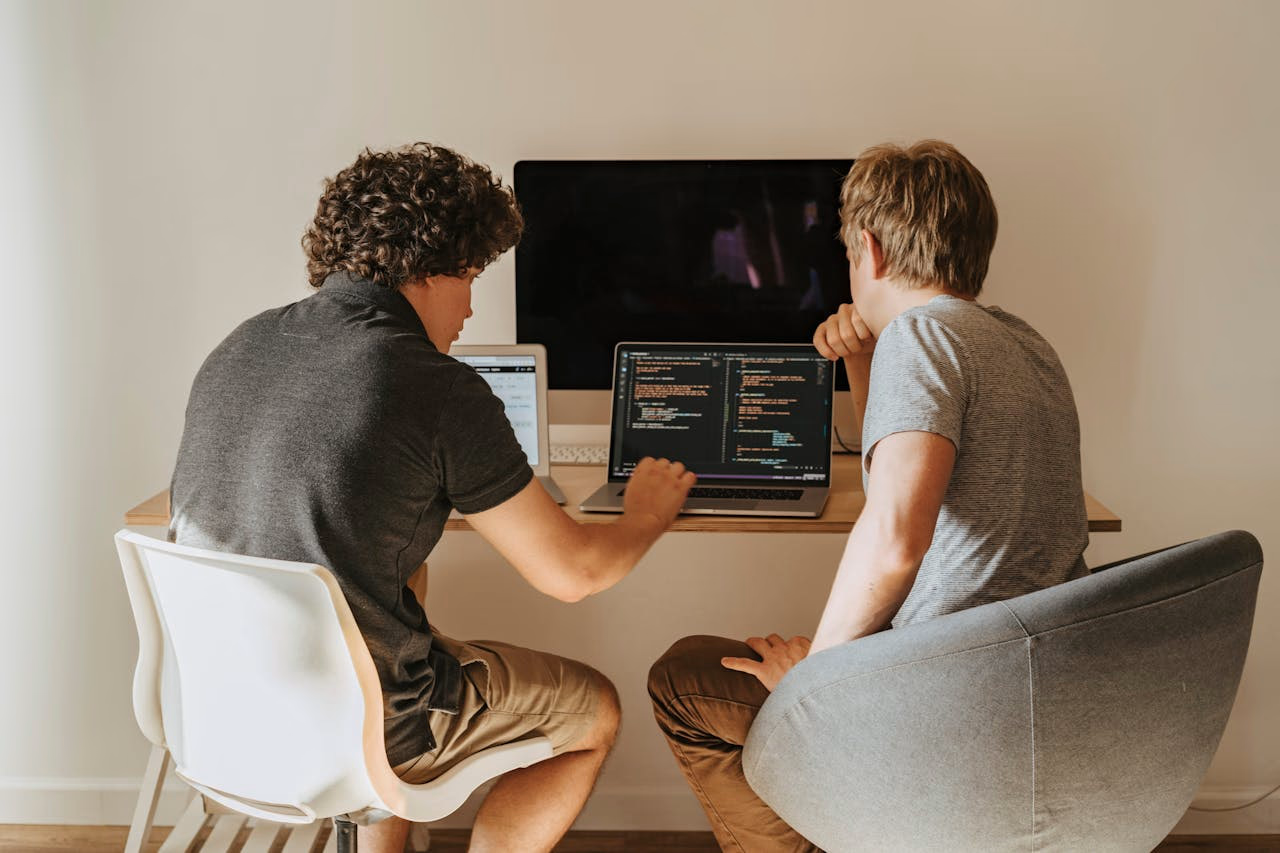
Software issues rarely appear out of nowhere. Performance slows down, security risks accumulate, technical debt grows, and releases become harder to manage. In many cases, the root cause is hidden in the code itself.
A professional code audit helps uncover those issues before they turn into costly outages, failed launches, or expensive rewrites. The right partner doesn't just point out problems, they explain why they exist, prioritize what matters, and provide a practical path toward a more reliable, secure, and maintainable product.
This guide highlights some of the leading code audit companies in the USA. Each brings a different mix of technical expertise, industry experience, and engineering approach, making it easier to find a team that matches your product, technology stack, and business goals.

Gilzor is a software development company that works with startups, SMBs, and product teams on building, improving, and reviewing digital products. We provide services across different markets, including the USA, where businesses often need an external engineering team to assess existing applications before adding new features or scaling their products. Our work includes reviewing architecture, development practices, application quality, and technical issues that affect long-term stability and maintenance.
When we take part in a code audit, we focus on understanding how the application works as a whole instead of looking at isolated pieces of code. We review maintainability, security, performance, and scalability, then identify areas that may slow development or create unnecessary risks. Along with audit activities, we also support implementation, testing, and ongoing improvements when changes need to be put into practice.


DICEUS offers software code audit services as part of its broader software engineering and consulting practice. Their audits are designed to help businesses understand the current condition of an application before expanding it, modernizing it, or integrating it with other systems. The review covers source code, architecture, technology stack, documentation, and security, giving development teams a clearer picture of what should be improved and what can be kept as it is.
Every audit looks beyond individual code issues and examines how the software performs in day-to-day use. The team evaluates maintainability, performance, scalability, and technical debt, then prepares practical recommendations based on the findings. Alongside the assessment, they can assist with architecture improvements, optimization, maintenance, or modernization if additional engineering work is needed.

Bolder Apps focuses on code audits for teams that want an independent review of an existing product before making technical decisions. Their process includes examining the codebase, deployment setup, and development pipeline to identify issues related to security, architecture, scalability, and maintainability. The findings are organized by business impact, making it easier to understand which problems deserve immediate attention.
Beyond identifying risks, they prepare a structured roadmap for addressing them and outline practices that help prevent similar issues in the future. Their engineering work also covers custom software development, product design, integrations, and mobile and web applications, which allows audit recommendations to fit naturally into ongoing development work.

JetBase includes software code audits among its engineering services for companies developing web, mobile, SaaS, and cloud products. Their audits concentrate on identifying weak points in existing applications before they become larger technical or operational issues. The review typically covers code quality, security, performance, compliance, and software architecture, followed by recommendations that development teams can use as a reference for future work.
The audit process moves through several stages, beginning with project analysis and ending with a final review after improvements are completed when requested. Alongside code audits, JetBase works on legacy code refactoring, cloud migration, DevOps, and custom software development, making the service relevant for products that continue to evolve after the initial assessment.

Softjourn approaches code audits as a way to evaluate whether an existing application is ready for future development or needs structural improvements first. Their review looks at code quality, security, performance, maintainability, compliance, and scalability, helping product owners understand how well the software can support new features, integrations, or business growth.
The assessment is carried out by developers and solution architects who document the current state of the codebase and prepare recommendations for the next steps. Depending on the project, the review may be followed by architecture assessment or additional technical improvements, giving teams a clearer direction before investing in further development.

DevCom approaches code audits as a technical assessment that helps businesses understand how stable and maintainable their software is before moving forward with new development. Their review covers source code, software architecture, third-party integrations, security, and overall system quality to uncover issues that may affect performance, scalability, or long-term maintenance. The process can also include an assessment of development workflows and documentation to provide a broader view of the project.
The audit doesn't stop with a list of findings. Development teams receive a structured report with recommendations, risk prioritization, and practical steps for improving the codebase. Depending on project needs, the company can continue with implementation, architecture improvements, or long-term engineering support after the review is complete.

Apriorit specializes in software audits with a strong focus on security, system reliability, and code quality. Their code review process examines applications from several angles, including architecture, infrastructure, dependencies, testing, and compliance. This makes the service suitable for products that need a detailed technical assessment before modernization, integration, or large-scale updates.
Each engagement looks at how different parts of the system work together, not only how individual pieces of code are written. Along with identifying vulnerabilities and performance bottlenecks, the team reviews cloud infrastructure, DevSecOps pipelines, third-party integrations, and recovery mechanisms to help organizations understand where improvements will have the greatest impact.

Cleveroad offers code audit services for businesses that need an independent technical review before scaling, upgrading, or maintaining an application. Their specialists analyze source code, software architecture, security, performance, and technical debt to identify issues that could affect future development. The outcome is a detailed report with recommendations that support informed technical decisions.
Beyond the code itself, the review includes compliance checks, mobile application configuration, and architecture performance. This gives product owners a better understanding of how the system behaves today and what changes can improve stability, maintainability, and overall software quality over time.
SapientPro takes a broad view of software audits by looking at the codebase together with the processes and infrastructure that support it. Their assessments cover architecture, code quality, testing, storage, infrastructure, performance, and development workflows. The goal is to identify practical improvements that help development teams spend less time solving recurring technical problems.
Recommendations are presented in a straightforward way with clear priorities and implementation steps. Depending on the project, the audit may include reviews of QA processes, cloud environments, AI systems, or scalability, giving businesses a better understanding of where technical risks exist and how they can be addressed.

Rubyroid Labs focuses on code audits for applications that have become difficult to maintain, scale, or secure over time. Their audit process combines manual code inspection with automated analysis to examine the structure of the codebase, frontend and backend logic, APIs, database models, and security practices. The review is designed to uncover issues that affect day-to-day development as well as long-term software stability.
One part that stands out is the modernization plan prepared after the audit. Instead of listing findings without context, the team groups issues by priority, estimates the effort required to resolve them, and organizes recommendations into a practical sequence. Along with identifying technical debt, they look at maintainability, performance, accessibility, and architectural consistency, making the audit useful for teams planning future development.

Langate approaches code audits as a technical risk assessment for existing software. The review combines automated analysis with manual inspection to identify security issues, coding mistakes, documentation gaps, and performance bottlenecks. Their process pays attention to both code quality and compliance requirements, making it suitable for products that operate in regulated environments or require regular technical reviews.
Every audit finishes with recommendations that development teams can apply during future iterations. Beyond finding problems, the assessment looks at how maintainable the application is, whether documentation reflects the actual implementation, and how the software can be optimized without unnecessary changes to the existing system.

Fora Soft approaches code audits as an independent review of the entire software system, not just the source code. Their assessment covers security, code quality, architecture, and operational readiness to help teams understand where technical risks exist before they grow into larger problems. Every issue is documented with supporting evidence, including its location in the codebase and a recommendation for resolving it.
The audit is organized into several reports so different stakeholders can work with the information they need. Development teams receive detailed technical findings, while product and business leaders get a summary of the overall system health and a roadmap that helps prioritize future improvements. The review can be useful before fundraising, product launches, infrastructure scaling, or when taking over an existing codebase.
Nimap Infotech treats code auditing as an independent technical assessment that helps businesses understand the current health of their software. Their review covers source code, architecture, infrastructure, third-party components, cloud environments, and development processes to identify issues that may affect security, reliability, or future scalability. The combination of manual review and automated analysis gives development teams a broad view of the application before major technical decisions are made.
The audit report goes beyond listing vulnerabilities. It explains how different findings relate to maintainability, performance, compliance, and technical debt while outlining practical improvements for future releases. The scope can include DevSecOps pipelines, cloud infrastructure, disaster recovery, UI quality, and third-party integrations depending on the project.
Daffodil Software includes code audits as part of its software engineering services for organizations that need to improve application quality before expanding or modernizing a product. Their engineers assess code quality, architecture, security, performance, and maintainability while reviewing technical debt and development practices that may slow future work. The process combines automated tools with manual analysis to give a balanced view of the codebase.
Following the assessment, development teams receive recommendations that can be applied in stages according to business priorities. The review may cover coding standards, test coverage, security frameworks, compliance requirements, and system architecture, helping teams prepare software for future development while reducing unnecessary complexity.
A-listware offers code audit services as part of a broader suite of software development and IT consulting solutions. The company helps businesses evaluate existing applications, identify technical issues, and understand where software can be improved before modernization or further development begins. Its expertise extends across software engineering, cybersecurity, quality assurance, infrastructure management, and cloud technologies, allowing code reviews to fit naturally into larger engineering projects.
Beyond the initial assessment, the team supports organizations with improving software quality, strengthening security, modernizing legacy applications, and maintaining complex IT environments. Since their services cover the full software lifecycle, audit findings can be followed by implementation, testing, infrastructure updates, or ongoing technical support, depending on the project's needs.
.webp)
GrowExx focuses on auditing AI-generated code before it reaches production environments. Their review combines automated scanning with manual evaluation by senior engineers to identify security vulnerabilities, architectural issues, unreliable dependencies, and compliance risks that may not be obvious during regular development. The process is intended for teams using AI-assisted coding tools and looking for an additional layer of technical validation.
The assessment follows a structured workflow that starts with understanding the codebase and finishes with a prioritized refactoring plan and continuous monitoring recommendations. Alongside security checks, the team examines business logic, software architecture, and production readiness, adapting the review to the technical and regulatory needs of different industries.
Itexus focuses on software development for fintech products, with code audits included as part of broader software assessment and modernization services. Their audits examine code quality, security, architecture, and technical debt while also looking at performance, compliance requirements, and the overall condition of financial software. The company also performs project rescue engagements, helping teams understand inherited codebases and identify issues that affect stability or future development.
Beyond reviewing the code itself, the team evaluates cloud infrastructure, DevOps practices, testing processes, cybersecurity, and system architecture. Their work often supports organizations planning modernization, scaling existing platforms, or preparing for AI adoption. Recommendations are presented with a practical focus on improving maintainability, reducing risks, and supporting long-term software evolution.
21Century.tech approaches code audits as a detailed investigation of software quality, security, architecture, and operational readiness. The review documents every issue with its exact location in the source code and combines technical findings with an architectural assessment and a prioritized remediation roadmap. Their process is designed for inherited codebases, production incidents, scaling challenges, and technical due diligence before investment.
The audit covers four main areas: security, code quality, architecture, and operations. Engineers examine vulnerabilities, testing practices, technical debt, infrastructure, deployment workflows, monitoring, and documentation. The result includes multiple reports that help both technical teams and business stakeholders understand the current state of the application and plan future improvements.
ScienceSoft performs software code audits by combining automated scanning with manual code analysis carried out by senior developers and security specialists. Their reviews examine security mechanisms, coding practices, software architecture, and application performance to help organizations understand where technical risks exist before they affect product stability or future releases.
The assessment looks at the software from several perspectives, including code quality, compliance, maintainability, and scalability. Depending on the project, it may include dynamic analysis, architecture evaluation, and security testing. Recommendations are supported by practical guidance so development teams can prioritize improvements without losing focus on ongoing product work.
A code audit isn't just about finding bugs or security issues. It's about understanding how healthy your software really is and whether it's ready for whatever comes next. Sometimes the review confirms that everything is on the right track. Other times, it uncovers small decisions that have quietly turned into bigger problems over time. Either way, having that clarity makes future development much easier.
As you compare code audit companies, pay attention to how they approach the review, not just what's included in the service. Some teams specialize in security, others dig deeper into architecture, technical debt, infrastructure, or AI-generated code. The right fit depends on your product, your goals, and the challenges you're trying to solve. A thorough audit should leave you with a clear understanding of your codebase and a realistic plan for improving it - without unnecessary complexity or guesswork.