01
Modernizing an Existing Product in Stages
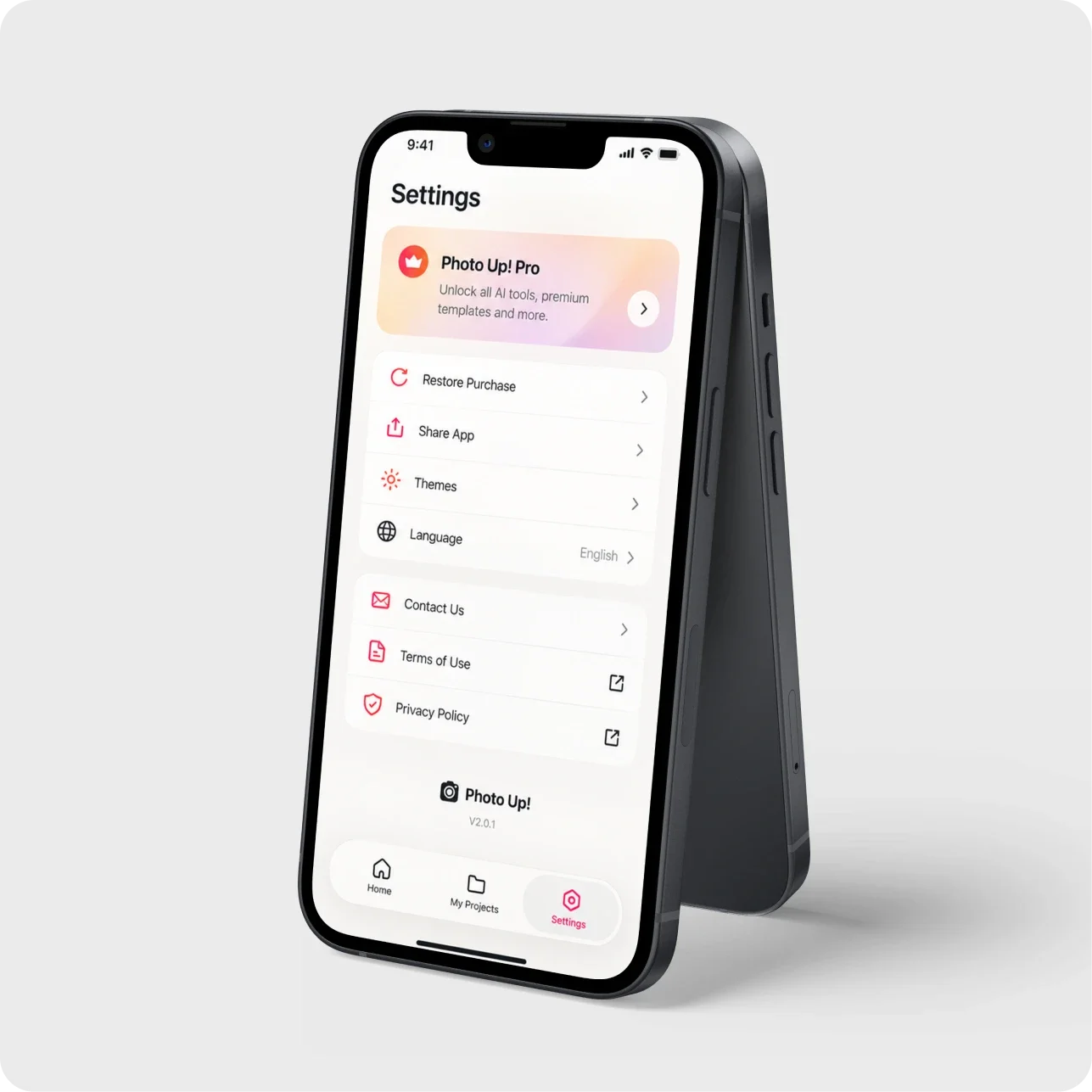
The original codebase needed substantial improvement while the application continued to evolve. We progressively refactored and rewrote individual parts of the application alongside feature development. This approach allowed technical improvements to move forward with the product roadmap and supported the broader version 2.0 redesign.
02
Connecting Mobile Editing With Backend AI Processing
AI editing required several coordinated steps: capturing user input, preparing image data, sending it for processing, and displaying the returned result. We integrated these steps into the mobile editing flow and connected the application to a backend working with multiple AI models. This kept complex processing behind a familiar interface while allowing the backend to support different processing options.
03
Aligning AI Usage With Subscriptions and Credits
Access to AI features depended on more than subscription status. Free users had limited usage, premium users received higher allowances, and additional credits provided access after those allowances were exhausted. We connected the mobile application, backend quotas, and payment integrations to support these access rules throughout the editing journey.
04
Supporting International Product Variations
International expansion introduced requirements beyond translation. Interface content, feature availability, and purchase screens needed to accommodate different audiences. We extended localization support and implemented regional configuration capabilities, giving the product team more flexibility to adapt the experience for individual markets.