01
Six cashback rules, not one
The platform runs six cashback types. They differ in how they’re earned, whether they expire, which currency they use, and in what order they’re spent. Every payment has to calculate taxes, apply the right balances in the right priority, handle refunds, and still reconcile to the cent. We built cashback as a ledger with explicit priorities instead of a single balance field, so every unit of cashback can be traced from earning to spending.
02
Access control that mirrors the restaurant business
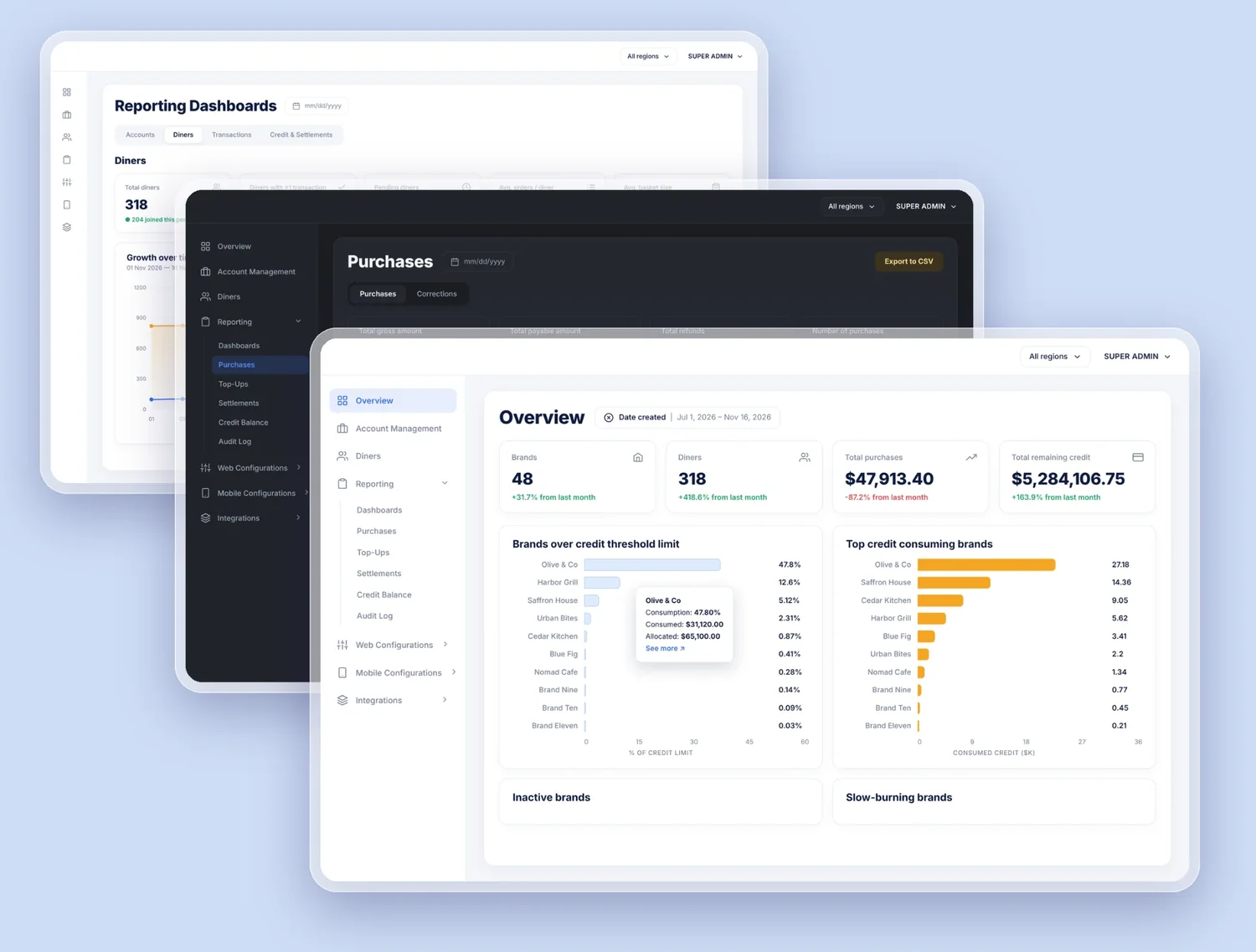
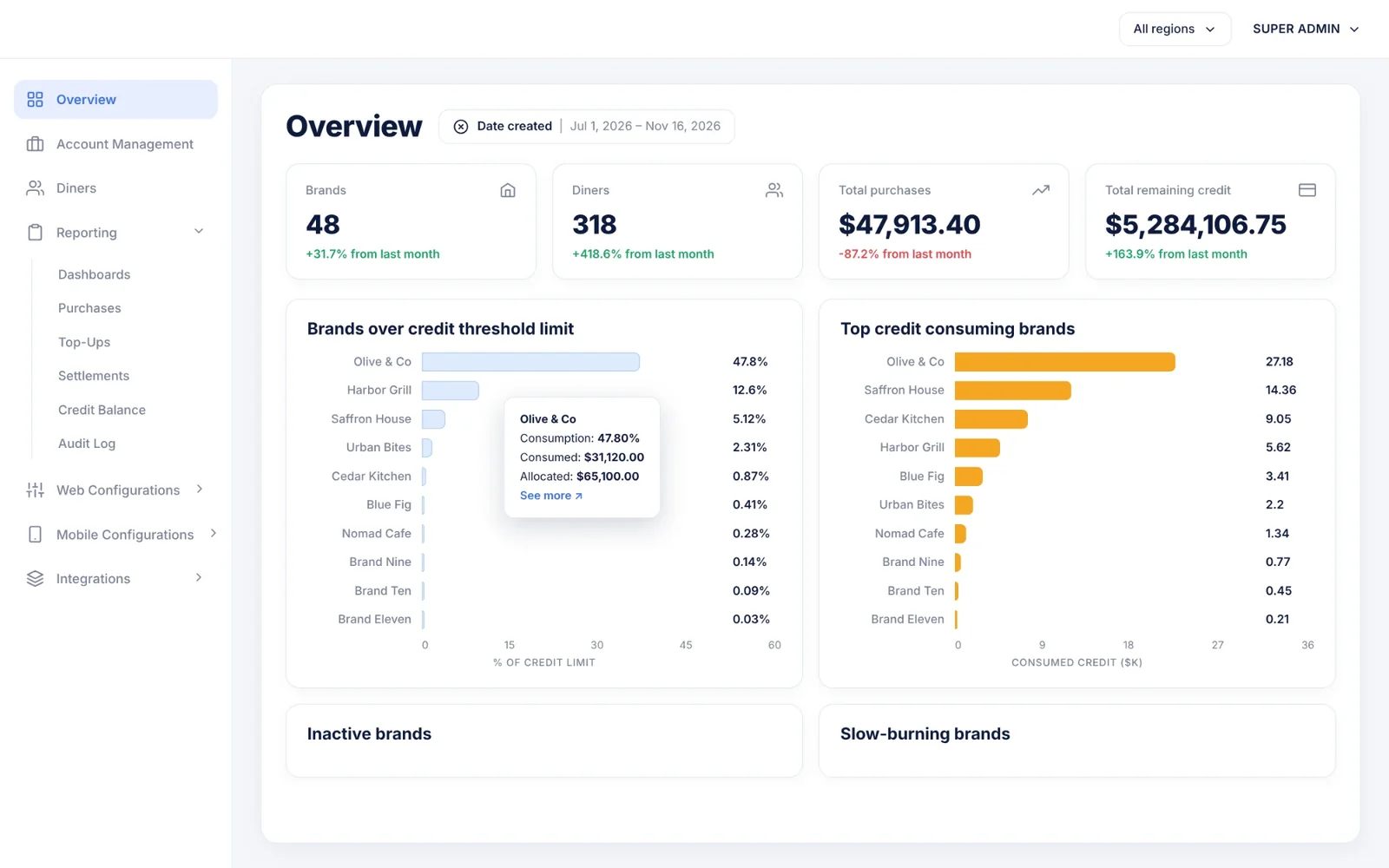
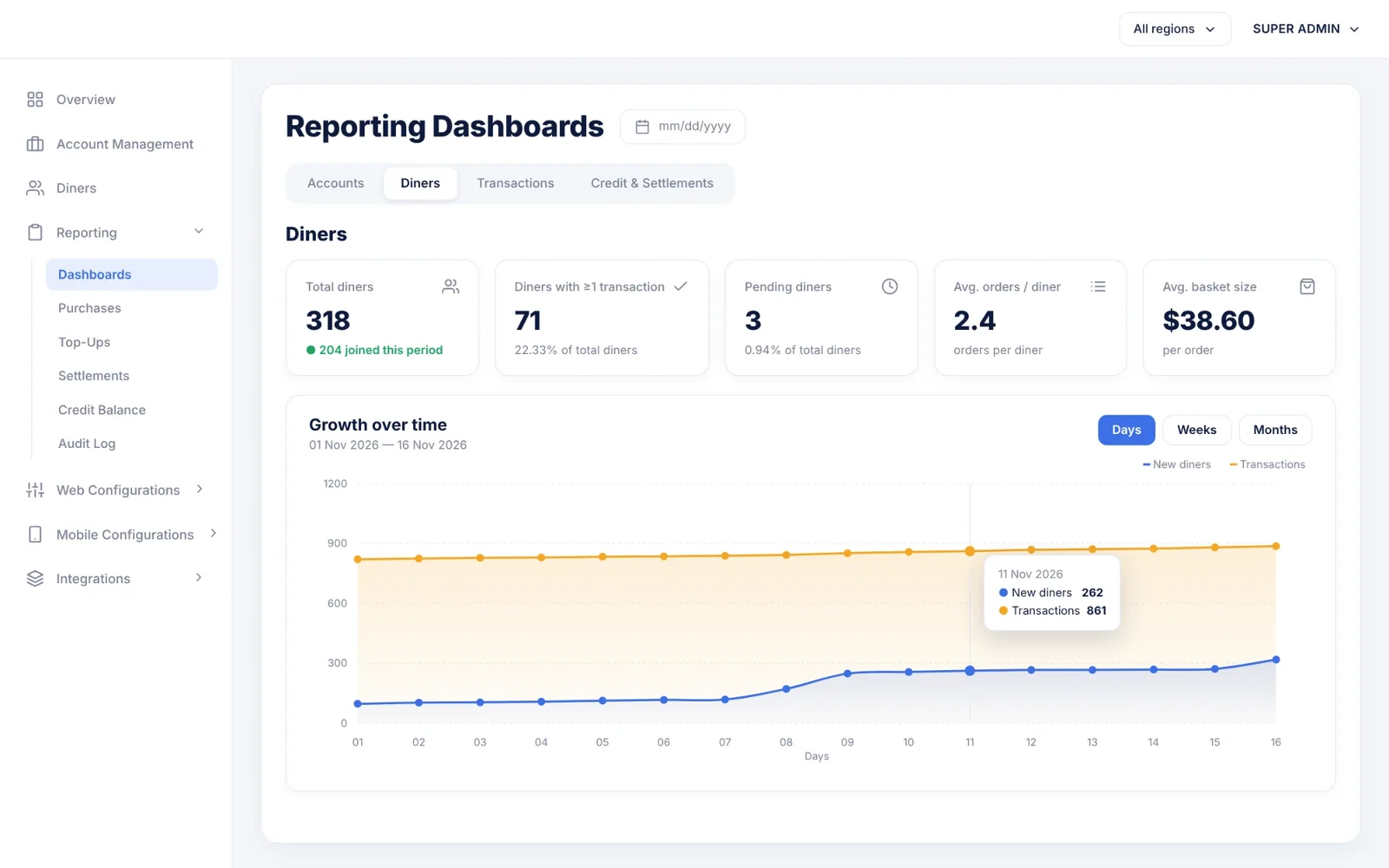
Partners are organized as group → brand → branch: a restaurant group owns brands, and brands own individual venues. A partner user may see one branch, a whole brand, or the whole group, and may be allowed to view transactions but not add users. Admins are also bound to countries. Admins configure permissions per section and per hierarchy level, and the backend enforces them. The UI doesn’t just hide what a user shouldn’t see.
03
Bills that live in the POS, not in our database
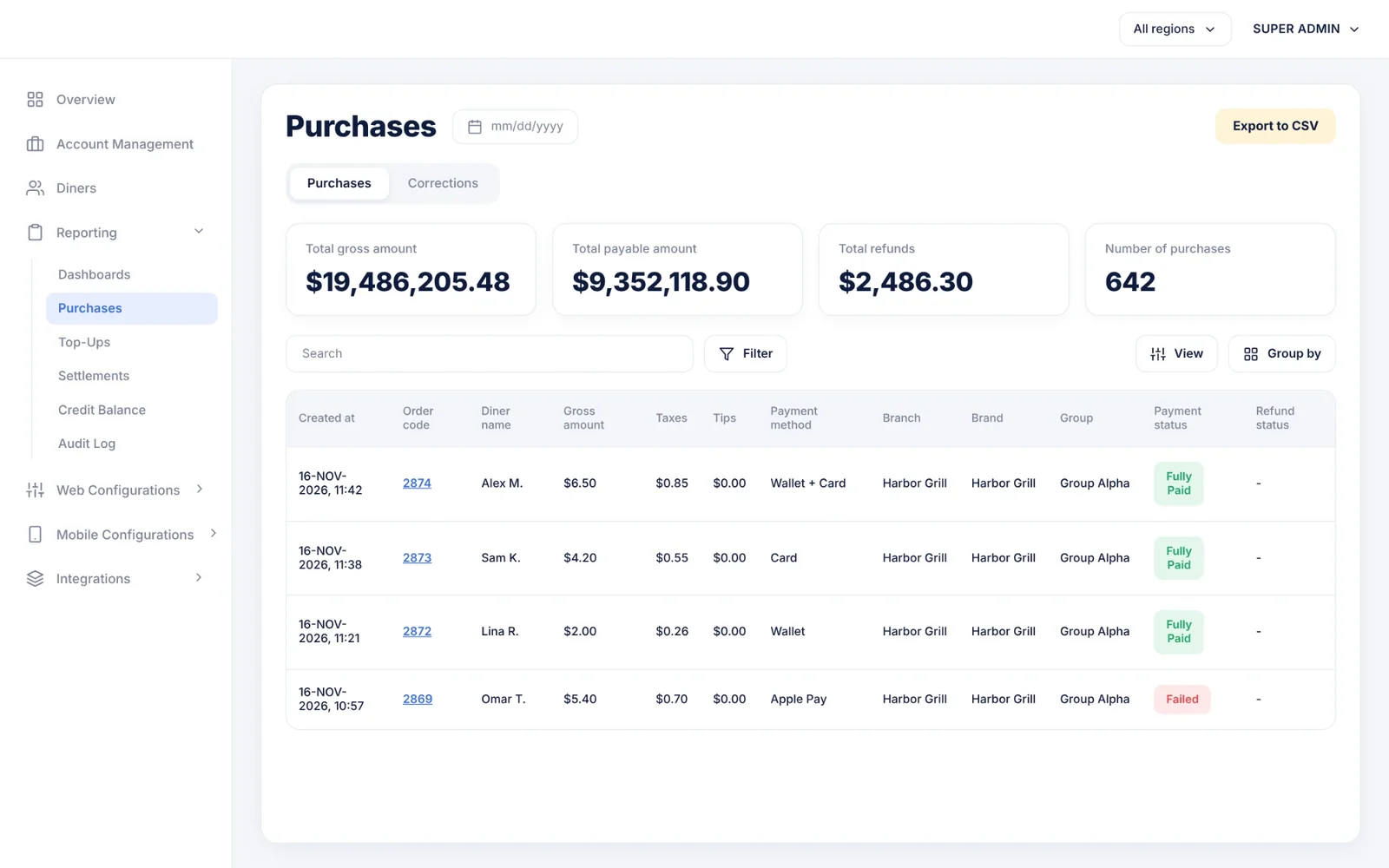
Restaurants create orders in their own POS. A guest enters the order number in the app, and the backend reads the bill from the POS, calculates taxes and cashback, and writes the payment status back. A bill can be split between five or six people or paid in part, through the POS or manually. Every path has to end in the same state on both sides.