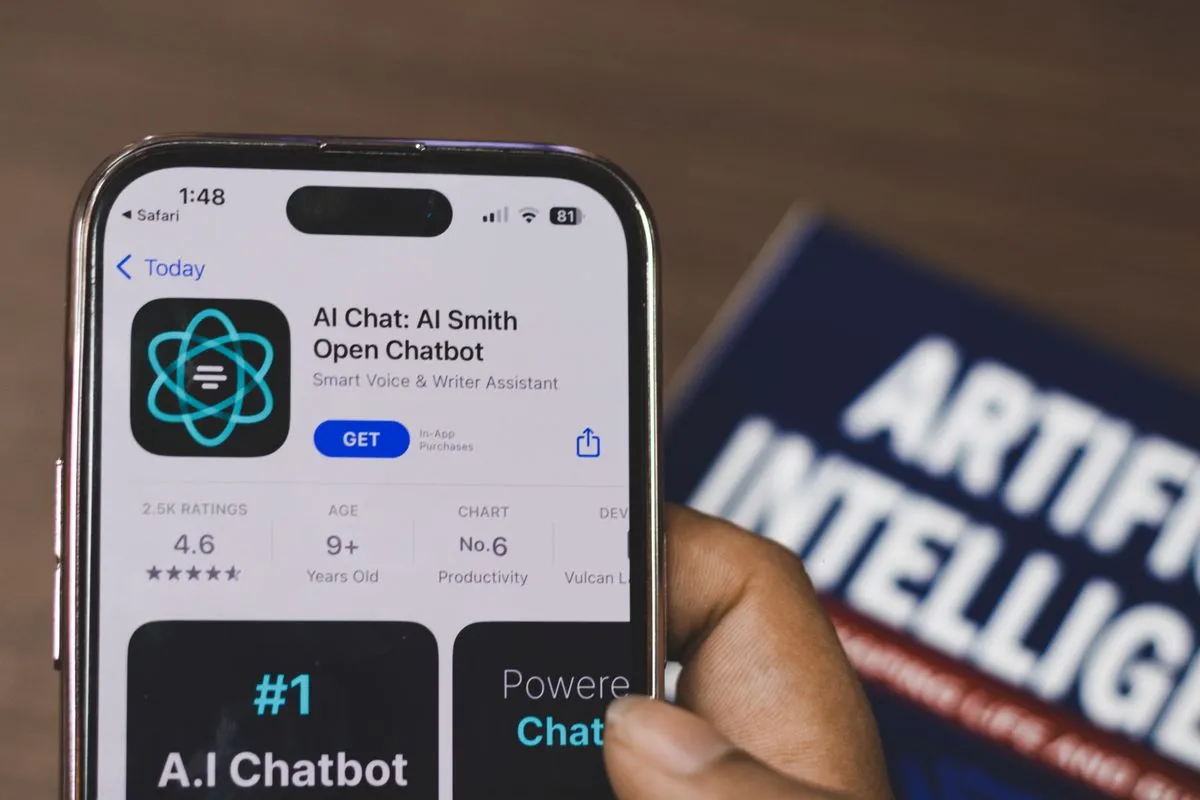
Bolt.new app development companies help businesses use AI-assisted development without leaving the difficult parts of software delivery entirely to generate code. This list covers teams that build directly with Bolt.new, improve existing Bolt projects, or move AI-generated prototypes toward production with stronger architecture, integrations, security, testing, and deployment. The comparison focuses on current service fit, relevant project types, and verified public information.

Gilzor works with products created in AI coding environments including Bolt, Lovable, Replit, v0, Cursor, Claude Code, and Supabase. Its relevant service is aimed at teams that already have a functioning AI-built product but need engineering work before exposing it to real users. The company addresses areas such as authentication, architecture, infrastructure, performance, security, and production stability.
Gilzor also provides conventional web and mobile development, QA, UI/UX design, backend integration, and ongoing support. That broader engineering background can be useful when a Bolt.new prototype needs more than isolated fixes and has to become part of a maintainable product.

.webp)
42 District uses Bolt.new as one of its software development platforms for MVPs, SaaS products, internal tools, and AI-connected applications. Its Bolt.new offering combines AI-generated code with structured data architecture, modular design, integrations, security controls, authentication, and deployment pipelines.
The agency also recruits Bolt.new developers to create micro-apps, client-facing tools, integrations, APIs, agents, and data workflows. This makes its Bolt.new capability more explicit than agencies that simply list AI-assisted development as a general service.

Sensussoft has a dedicated Bolt.new development service focused on rapid MVP creation and prototype-to-production work. The company uses Bolt.new for full-stack application development, then adds engineering work around error handling, security, performance, QA, deployment, and project handoff.
Its Bolt.new stack includes React, TypeScript, Node.js, Vite, Tailwind CSS, Supabase, Stripe, Netlify, Vercel, GitHub, and WebContainers. This gives businesses a relatively clear view of the technologies Sensussoft may use around a Bolt-generated application.
OSKI Solutions development model is relevant to teams that need to take an AI-generated prototype further. The company handles software prototyping, MVP development, web and mobile products, backend systems, integrations, and inherited codebases. Its prototyping service specifically covers rapid front-end prototypes, functional backend and data prototypes, AI features, and a path from prototype to production. That makes OSKI a practical option when Bolt.new has been used for the first version but the application now needs structured engineering.
Makeitfuture provides vibe coding and AI-native application development using platforms including Bolt.new, Lovable, Cursor, and Claude Code. Its service covers both new applications and projects that have already been generated with an AI development tool but require professional engineering to move forward.
The company has full-stack development, AI app development, MVP creation, SaaS applications, internal tools, portals, and admin systems among relevant use cases. Bolt.new therefore sits within a broader AI and automation practice rather than functioning as a standalone niche service.
Hoop Interactive builds new products directly in Bolt.new, Lovable, and Base44 while also offering rescue, migration, and prototype-to-production services for existing AI-generated applications. Senior engineering review is part of the company's positioning, with attention given to security, production reliability, and code quality.
For Bolt.new specifically, Hoop works with the platform's Node.js and WebContainers environment and handles scale readiness, repairs, and migrations when an application needs to move onto infrastructure outside the original builder.
A-Listware provides full-cycle software development. Its process covers planning, architecture, UX/UI, MVP development, testing, deployment, maintenance, and eventual handover, which aligns with the work often needed after an AI-generated application moves beyond its prototype phase. The company also develops mobile, cloud, enterprise, and custom software and supports React Native, Flutter, AI, and data-focused projects. For Bolt.new users, the relevant use case is extending or rebuilding parts of an exported application when requirements outgrow the initial generated implementation.
Build Your AI provides a Bolt.new development service specifically aimed at the gap between a fast prototype and a production application. Rather than focusing on initial visual generation, the company works on backend stability, access controls, payments, integrations, monitoring, and release hardening.
This makes the service particularly relevant to founders who have already provided a workflow or user interface in Bolt.new but are running into engineering issues around real customers, billing, external APIs, or operational reliability.
Itexus provides full-cycle application engineering with prototyping, MVP development, project rescue, cloud deployment, testing, and ongoing support. Itexus also has substantial fintech and financial software experience, making it particularly relevant for AI-built prototypes that need to evolve into applications with stricter security, data, or business logic requirements.
LOW/CODE Agency works with businesses that have validated an idea using Bolt.new or Lovable and now need to turn the generated prototype into a more maintainable product. The company focuses on rebuilding or extending applications with improved architecture, backend logic, performance, and scalability.
LOW/CODE treats the initial AI-generated application as a useful product validation that can be carried forward into a stronger technical foundation. This approach may fit businesses whose first version has already proven what users need.
.webp)
net-devs focuses on AI-augmented software engineering with senior developers supervising AI-assisted development work. Its technology coverage includes .NET, JVM languages, Node.js, Python, Go, React, Angular, Vue, cloud platforms, and AI engineering. It also accepts existing codebases and begins takeover projects with an assessment of the current software, which can fit a Bolt.new project that needs a conventional engineering team after the first generated version.
Productera takes a different route from agencies that keep development inside Bolt.new. Its Bolt-to-production service extracts an existing Bolt application and rebuilds it on conventional infrastructure such as React or Next.js, Node.js, PostgreSQL, and AWS or GCP. The process covers application auditing, architecture planning, development, data migration, production deployment, monitoring, and handoff.
%20(3).webp)
SoftPro develops custom web, cloud, and AI software using technologies such as .NET, React, Azure, LLMs, RAG, and machine learning. Its Microsoft and cloud focus can be useful where a Bolt-generated interface needs to connect with business systems, custom APIs, Azure infrastructure, or a more substantial backend.
.webp)
Cartoon Mango provides dedicated Bolt.new development services for turning AI-generated applications into production products. Its developers work with Bolt's React and Vite output and can add databases, authentication, payment systems, storage, AI APIs, analytics, monitoring, and cloud deployment.
The company covers a broad range of Bolt.new use cases, including SaaS dashboards, AI-powered tools, internal business systems, marketplaces, and developer tools. It can also keep parts of the existing Bolt prototype while extending the application with conventional backend and infrastructure services.
21century.tech is an AI-native software studio that combines AI-assisted development with senior engineer review. Its workflow covers product briefs, AI-augmented implementation, testing, CI/CD, documentation, and deployment to the client's infrastructure or a managed environment. Its fit is broader: teams can use the company after an AI-generated prototype is available and needs human-reviewed production engineering. This may be especially relevant for teams that want to retain the speed of AI-assisted development without relying solely on generated code for the final application.
Mobian focuses on mobile development, AI-enabled applications, backend engineering, and end-to-end product delivery. It is better viewed as an engineering option for projects that begin with an AI-generated prototype and later need custom mobile, backend, cloud, QA, or AI work.
Bolt.new gives teams a fast way to turn product ideas into working applications, while the level of engineering support needed afterward varies by project. The companies in this list cover several paths, from building MVPs directly in Bolt.new to improving existing applications, adding backend integrations, strengthening security, and moving mature prototypes onto conventional production infrastructure.
When comparing providers, look at their experience with Bolt.new, the type of application they build, their technical stack, and the stage they support. Some specialize in new development, while others focus on rescue work, production hardening, migration, or continued engineering. The right choice depends on whether the project needs a new Bolt.new build, targeted improvements, or a broader transition from prototype to production.