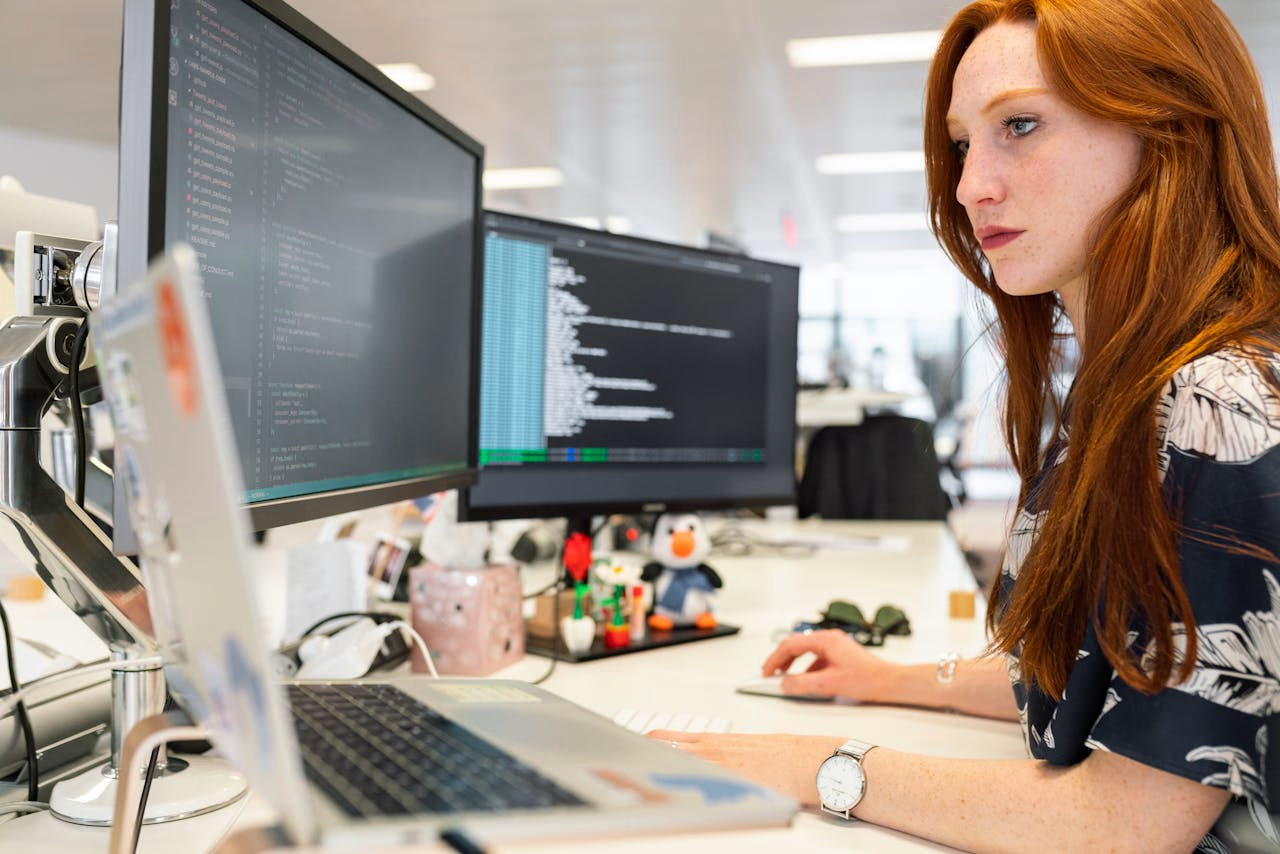
Production readiness services help teams move software from a working build to a system that can handle real users, traffic, incidents, deployments, and operational risk. The companies below cover different parts of that process, including readiness audits, architecture reviews, security checks, cloud infrastructure, CI/CD, observability, load testing, SRE, and launch support.

Gilzor works with products that need to move from an MVP, AI-built application, or unstable existing codebase into reliable production operation. Its production-focused service covers codebase and architecture reviews, security, reliability, scalability, deployment, monitoring, testing, and launch planning. Teams can begin with a short audit that documents production-readiness gaps and prioritized recommendations, then continue into implementation with Gilzor's engineers. The company also supports mobile and web applications, including products facing store-release, infrastructure, migration, or scaling problems.

Itexus suits fintech products where production readiness includes security, reliability, regulatory requirements, and operational controls. Its project audit and rescue services cover code quality, documentation, stability, performance, and security. The company also handles cloud and DevOps work such as Kubernetes, CI/CD, observability, backup, disaster recovery, and rollback planning. QA capabilities include manual and automated testing, API testing, regression testing, performance validation, and penetration testing. Post-launch support extends into monitoring, incident response, releases, and performance tuning.
.webp)
NorthFront Technologies concentrates its production readiness work on AWS infrastructure. Its AWS Production Readiness Review examines account structure, IAM, networking, EKS and ECS environments, CI/CD, rollback procedures, secrets, monitoring, backups, incident runbooks, and cloud costs. The company combines assessment with implementation, allowing teams to move from a prioritized risk list into infrastructure fixes without changing providers. Its wider work includes AWS DevOps, Kubernetes, Terraform, observability, and SRE.
.webp)
net-devs approaches production readiness through production-grade software engineering, cloud platform work, testing, deployment, and technical audits. Its services include cloud-native architecture, infrastructure-as-code, platform engineering, enterprise codebase audits, automated and manual QA, and production deployment. The company also builds high-reliability software for regulated and operationally sensitive areas such as fintech, healthcare, logistics, and B2B SaaS.
21century.tech uses an AI-assisted software development model while keeping senior engineers responsible for architecture, code review, testing, security decisions, and deployment quality. Its delivery approach includes CI/CD, automated tests, technical documentation, and deployment to either client infrastructure or infrastructure managed for the project. That combination can make the company relevant to startups moving quickly from a prototype or early product into an environment where maintainability and release controls matter more.
Cloudacio offers a fixed-scope AWS Production Readiness Review for SaaS and technology companies. The assessment covers security, reliability, performance, cost, operational practices, and other AWS Well-Architected areas. Its process includes an architecture assessment followed by a prioritized remediation plan, executive summary, architecture documentation, cost optimization opportunities, and a walkthrough with the client team. Cloudacio also provides AI product engineering, cloud operations, and SOC 2 readiness, so remediation and ongoing infrastructure work can continue beyond the initial assessment.
OSKI Solutions supports production readiness through DevOps consulting, cloud engineering, CI/CD, infrastructure-as-code, observability, QA, and security work. Its DevOps practice focuses on making software releases repeatable through automated pipelines, containerized infrastructure, monitoring, and documented environments. OSKI works across AWS, Azure, Google Cloud, and Kubernetes and also provides testing and compliance-focused engineering designed to reduce failures once applications reach production. This makes it suitable for teams that need practical implementation around release and operational readiness rather than an assessment alone.
Mobian develops mobile, web, and AI products with QA, backend engineering, APIs, cloud infrastructure, and post-launch support included in its broader delivery scope. The company provides its work in terms of production-ready software with attention to architecture, documented code, testing, monitoring, and future scaling. It can fit projects where readiness work is part of completing the product.
.webp)
Lornets is a London engineering consultancy focused on production assurance for software that has become commercially or operationally important. Its Production Readiness Assessment evaluates what a system must withstand, collects technical evidence, measures its behavior, and determines which components should be kept, refactored, or replaced. Areas examined through its production assurance framework include architecture, maintainability, security, recoverability, performance, scalability, data, and privacy. Clients receive a Production Assurance Dossier containing findings, technical decisions, verification criteria, and an engineering roadmap.
%20(3).webp)
SoftPro provides custom software and cloud development with coverage extending from architecture and application engineering through deployment and ongoing support. Its cloud practice works with platforms such as Azure and AWS, while its broader software delivery includes full-stack development, project management, QA, modernization, and maintenance.
A-listware combines software development with QA, infrastructure services, cybersecurity, DevOps, and ongoing IT support. Its cybersecurity work includes security assessment, penetration testing, source code review, and compliance-related services, while its infrastructure offering covers cloud management and DevOps implementation. CI/CD and release automation can also be incorporated into projects. This service mix is relevant to organizations that need production preparation across both application quality and the infrastructure that will operate the application after release.
ThinkXL provides AWS production readiness services with a particular focus on AI workloads. Its review checks areas such as model quotas, agent permissions, IAM, networking, data protection, backups, recovery, monitoring, runbooks, deployment processes, and projected cloud spend. Each check is tied to evidence and receives a defined status, followed by a readiness report and prioritized action plan. ThinkXL also handles production infrastructure and managed AWS work, which can be useful when the assessment identifies gaps that require direct implementation.
Pharos Production incorporates production readiness into its wider software delivery and DevOps process. Before launch, its methodology covers monitoring and alerting, security auditing, penetration testing, runbooks, and rollback planning. Ongoing support can then include security patches, performance tuning, and operational assistance. Its DevOps offering also addresses CI/CD, production environments, SLOs, documentation, and handover. This model fits companies that want readiness work embedded into development and release delivery instead of handled as a separate audit.
Covaratech approaches production readiness primarily through site reliability engineering. Its SRE service includes a production readiness review before launch along with SLOs, error budgets, observability, incident response, capacity planning, load testing, disaster recovery, and restore testing. The company can operate systems through an ongoing SRE engagement or document the environment and transfer responsibility back to the internal team. Its infrastructure coverage includes AWS, Azure, Google Cloud, Kubernetes, and common observability and deployment tooling.
DevOps Team combines production readiness reviews with managed DevOps, ITOps, SecOps, infrastructure audits, Kubernetes, CI/CD, monitoring, and ongoing cloud operations. Its production readiness process reviews deployment and rollback, observability, database resilience, incident response, secrets and access, and capacity under load. The company starts broader engagements with an infrastructure audit and prioritized roadmap, then assigns engineers who can continue implementing and managing the environment. It operates from the EU and serves clients across multiple time zones.
Production readiness services vary considerably in scope. Some companies focus on dedicated readiness reviews, while others combine audits with cloud engineering, DevOps, SRE, security, testing, or ongoing operational support. The right provider depends on the system’s architecture, cloud environment, development stage, and the level of hands-on assistance required after the assessment.
When comparing production readiness services, examine the areas included in the review, the evidence or documentation provided, remediation options, cloud expertise, and post-launch support. This helps teams choose a service that matches both their current production gaps and the engineering work required to operate the system reliably after release.